In shortSnorkelling at Icacos splits in two. Off the 220-metre southwest beach there is a shallow shelf of sand and seagrass you wade straight into. The reef sits elsewhere: boat trips run their snorkel stop in about 18 to 25 ft of water, either on the flat reef south of the cay or on the richer reef beside the mooring buoys. There are no lifeguards.
18–25 ftusual reef stop depth
83 fish speciesin 33 families
39 coral speciesrecorded in the reserve
No lifeguardsswim at your own risk
Icacos island snorkeling: the beach shelf and the reef stop
The water off the southwest beach, the sector DRNA's 2017 field study marks as Zone B for bathers and water taxis, is a shallow shelf of sand and seagrass. Turtle grass dominates it, manatee grass takes the deeper patches, and DRNA's Icacos report records endangered sea turtles grazing those beds. Calm water, because the cays block the wind and waves, with no reef in it.
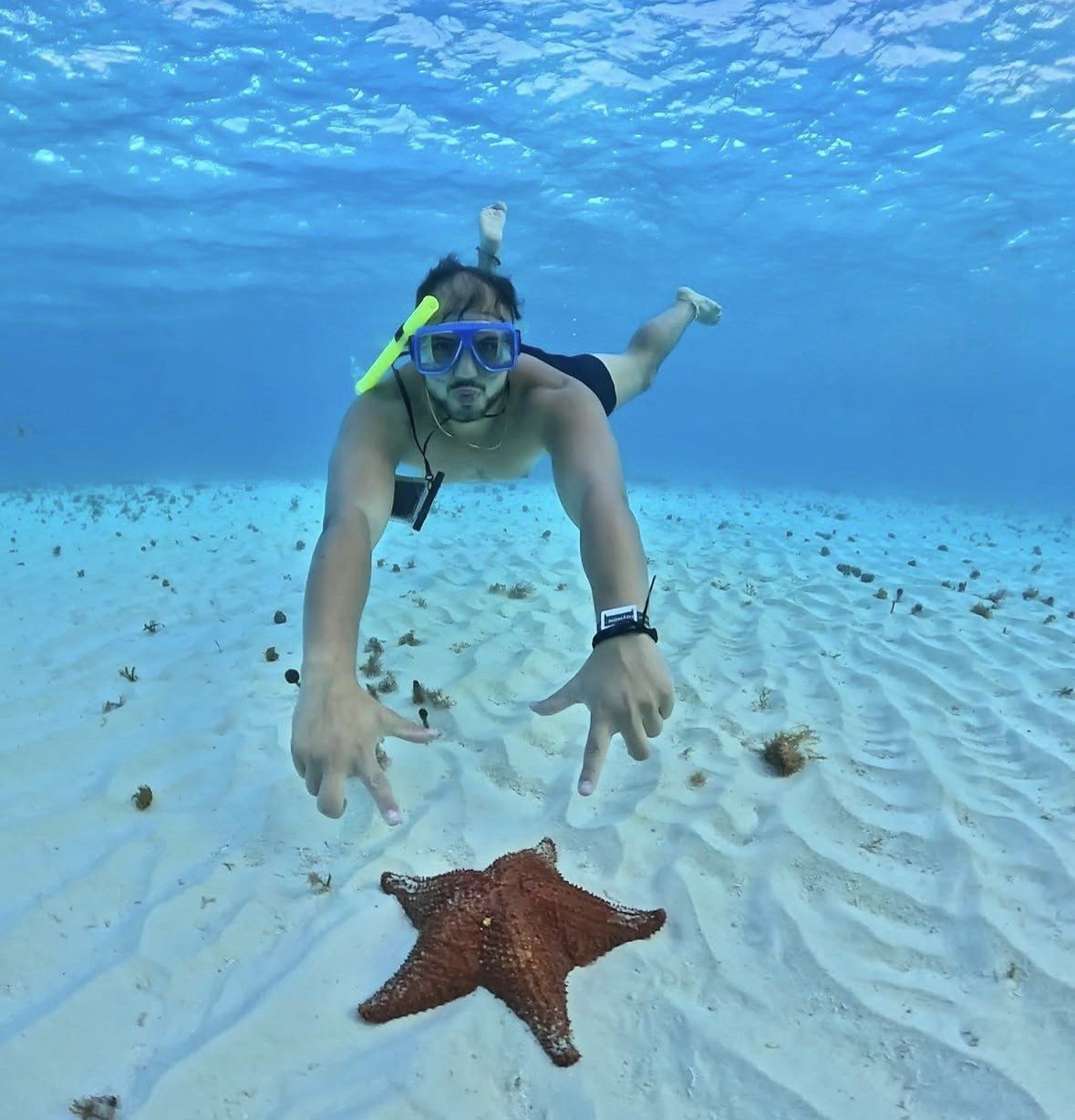
The reef itself is a short boat ride off the sand. Trips run their in-water stop in about 18 to 25 ft on one of two shallow reefs: the flat reef south of the cay, where catamarans begin their excursions, or the reef beside the mooring buoys, which DRNA found held greater fish and coral diversity. Ask which one your boat uses. Endangered staghorn coral grows on the shallow reef the tour boats work, so the structure under you is fragile even where it looks like broken rubble, and one careless fin kick breaks it.
What swims past your mask comes from a documented pool: survey work on the La Cordillera reefs has logged 83 fish species spread across 33 families, half of them commercially important, over reefs built by 39 scleractinian coral species and three hydrocorals. Parrotfish, wrasses, damselfish, triggerfish, snappers, groupers, butterflyfish, jacks, barracudas and surgeonfish all turn up on that list, over hard corals of the Montastraea, Diploria, Acropora, Colpophyllia and Porites genera and soft gorgonians.
How much time you actually spend in the water
The one published in-water figure for this stretch of coast comes from a morning snorkelling boat working out of Villa Marina: its 8:00 a.m. to 1:00 p.m. trip, with check-in from 7:15 a.m., gives about 1 to 1.5 hours of snorkelling. Use that as the yardstick. On a five-hour boat day the rest of the clock goes on the crossing, beach time, lunch and the ride home.
Of the tours on this site, the 5.5-hour Fajardo catamaran snorkelling tour with lunch is the longest day and the earliest start: check-in at 7:00 a.m. at Villa Marina, an in-person guide and snorkel gear in the fare. The 5-hour picnic cruise has the same shape with a later check-in, by 8:30 a.m. at the latest, and a bathroom on board. The 3.5-hour self-drive mini boat tour is the shortest day and the most snorkel-led of the three, with guided snorkelling at the reserve's reefs written into the itinerary, premium gear, a beginner briefing and no licence needed.
If your day leans towards the sand instead, the shelf off Zone B is the water you will use, and you can get in and out of it as often as your return slot allows.
| Tour | Duration and price | Gear | In-water format |
|---|
| Fajardo: Icacos Island Catamaran Snorkeling Tour with Lunch | 5.5 hours, from $130, 4.8 ★ (103 reviews) | Use of snorkelling equipment | In-person guide, 7:00 a.m. check-in at Villa Marina |
|---|
| Icacos Deserted Island Catamaran, Snorkel, and Picnic Cruise | 5 hours, from $138, 4.8 ★ (2587 reviews) | Use of snorkelling equipment | Snorkel stop plus beach time, check-in by 8:30 a.m. |
|---|
| Self-Drive Mini Boat Snorkeling Tour to Icacos Island | 3.5 hours, from $250, 5.0 ★ (1969 reviews) | Premium snorkel gear, USCG-approved life jackets | Guided snorkelling at the reserve's reefs, convoy led by the operator |
|---|
Guided snorkelling from your own boat
Guided snorkelling at the reserve's reefs is written into the itinerary on this 3.5-hour trip, with premium gear, USCG-approved life jackets and a beginner briefing, so the in-water time drives the day instead of sitting on the end of it.
★ 5.0/5 · 1,969 reviews
Snorkel gear: included on every tour here
All three tours above put snorkelling equipment in the price, and the self-drive trip specifies premium gear plus Extrasport USCG-approved life jackets. That matters more here than at most beaches. Icacos is uninhabited and nothing at all is sold or rented on it, so whatever you need in the water has to be on the boat before it leaves the marina.
Towels are not included on either catamaran, so pack one, and bring your own mask if you have one that seals properly. A supplied mask that leaks will cost you most of your hour, so test the seal on the boat before you get in.
Icacos island crystal clear water and what takes it away
Clear water here is seasonal. For visibility, aim at January, February or March: the National Weather Service office in San Juan places the dry season in those three months, and that is the calmest, clearest window for a day on the water. April tips into the rainy season, and from 1 June to 30 November the Atlantic hurricane season is running, with activity at its height on 10 September. Wind and swell are what close visibility down, and they are also what makes a captain call off a sailing. No operator publishes a wind or swell limit, so that decision reaches you on the morning.
Sargassum is the other variable. Weed has beached on Caribbean shores in nearly every spring and summer since 2001, the Atlantic belt that feeds those events peaks in June or July, and winter is the low point. Loose weed clouds the shallow shelf off the beach more than it bothers a reef stop you reach by boat.
Even on a middling day the use zones around Icacos sit in the lee of the cays, which is why the snorkel stop often works when the water further out does not. Sand on the beaches shifts through the year with the littoral currents, so the depth where you wade in changes between February and August.
Getting in from the boat, getting in from the sand
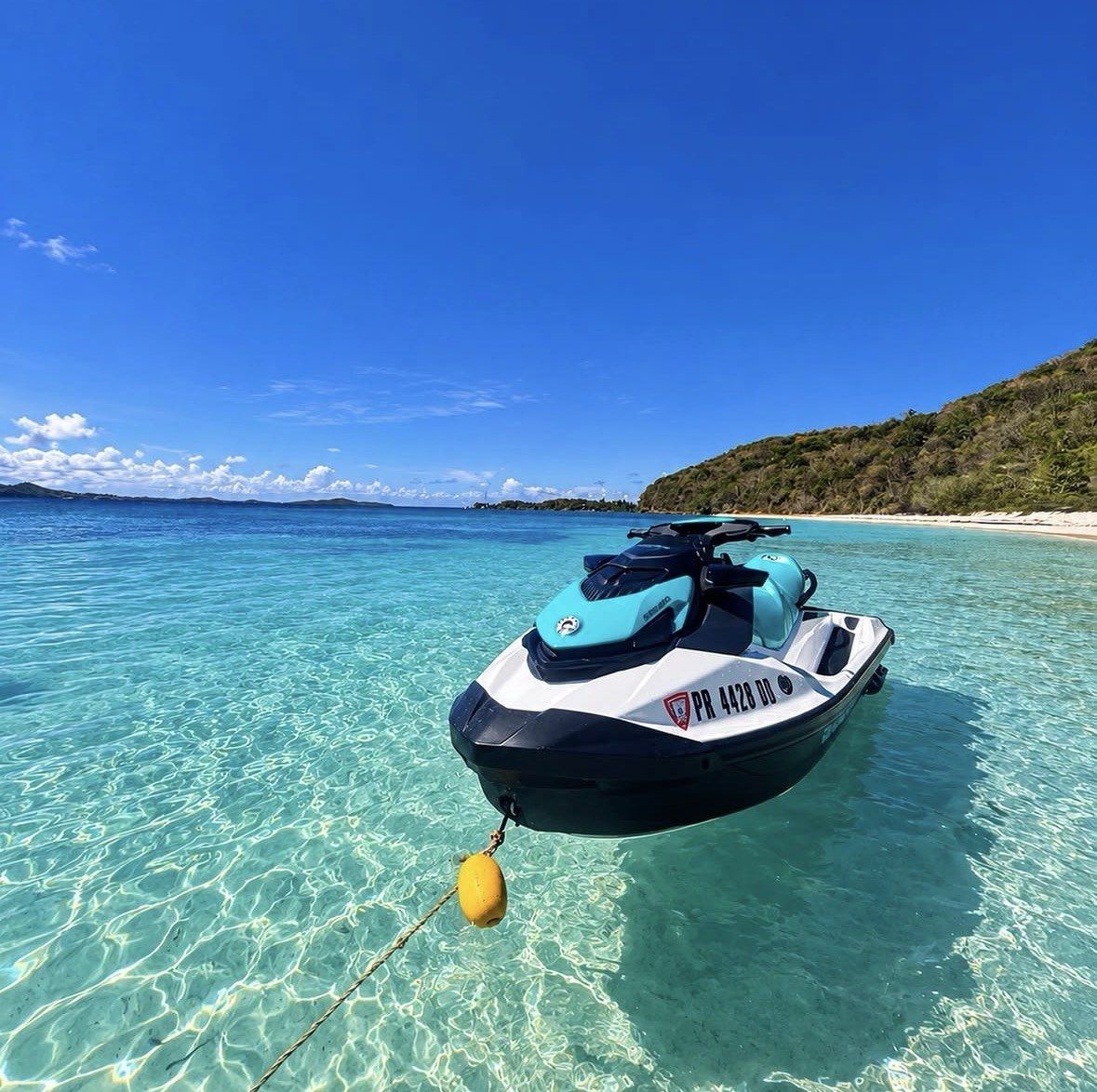
At the reef stop you go in over the side with nothing to stand on under you, in 18 to 25 ft of water. The boat should be tied to one of the mooring buoys DRNA installed at the reserve's most-visited sites, Icacos among them. Anchoring has stripped bare patches out of the seagrass meadows around the cays, which is why those buoys went in.
Off the beach it is a walk-in from 220 metres of sand on the southwest side, and the shelf shallows out gently. There are no lifeguards anywhere on Icacos, so swimming and snorkelling are at your own risk, and nobody on the cay is going to hand you a rinse or a bottle of water afterwards.
Go in early rather than mid-afternoon. DRNA's counts put the busiest hour at 2:00 p.m., with one reading of 964 people in the southwest bather zone at that hour, and fewer bodies in the water means less sand stirred off the bottom and better light on the coral.
What the reef rules come down to
Icacos sits inside the Reserva Natural Arrecifes de La Cordillera, about 29,653 acres (120 km²) and mostly submerged, designated on 2 January 1980 and administered by the Departamento de Recursos Naturales y Ambientales since 1991. It is not designated as a no-extraction area and all kinds of water activities are allowed there, which leaves the condition of the reef resting on how visitors behave in the water.
DRNA watched snorkellers at Icacos and logged at least one damaging act by 33 to 34% of them: disturbing an organism in 21.6% of observations, kicking the reef with fins in 19.6%, touching coral in 15.6%. The fixes are small and worth settling before you get wet.
- Hands stay off coral, fans and anything living, including the things that look like plain rock.
- Keep fins flat and behind you instead of pedalling downward over shallow coral.
- Never stand on the reef. Rest at the boat ladder or hold onto a float between looks.
- Give turtles room on the seagrass beds and do not follow them; turtles in the reserve are already at risk of vessel strikes.
- Stay off the small rocky islets ringing the cay and Cayo Ratones, listed as sensitive seabird nesting habitat, with breeding from March to September.
- Ask the operator before taking anything out of the water; the reserve's detailed regulations are not published online.
Questions people ask
Is the snorkelling at Icacos suitable for a first-timer?
The waters around the Icacos use zones are calm, sheltered by the cays themselves, which makes them forgiving for a first outing with a mask and snorkel. The self-drive mini boat tour includes a beginner briefing covering snorkelling and ocean safety along with USCG-approved life jackets, and the 5.5-hour catamaran trip has an in-person guide. Icacos has no lifeguards, so you are responsible for yourself in the water.
Will I see sea turtles while snorkelling?
Sightings are never guaranteed, but DRNA's Icacos study notes that populations of endangered sea turtles graze the seagrass beds in the waters around the cay, which is the shelf you float over off the beach. Manatees, boobies and brown pelicans also live in the reserve and are protected species. Keep your distance from anything you meet and do not chase it.
Which months have the least seaweed in the water?
Winter. The Great Atlantic Sargassum Belt that feeds Caribbean beaching typically peaks in June or July and is at its lowest in winter, with build-up running from spring into summer. Those same winter months hold Puerto Rico's dry season, January through March, so the clearest water and the cleanest sand fall in one stretch of the calendar.
Can I rinse off or change after snorkelling?
Not on the island. The cay is uninhabited and nothing is laid on for visitors: no toilets, no tap or bottled water, no food stall, no bins, no built shade. The picnic cruise catamaran has a bathroom on board, and on the mainland side there are public restrooms and outdoor showers near the Las Croabas waterfront, close to the street parking just off the main road.
Does a snorkel stop at Icacos ever get cancelled?
Captains make the weather call, and the window where it happens most is the Atlantic hurricane season, 1 June to 30 November, with activity peaking on 10 September. No published wind or swell threshold exists, so you find out close to the day. Your protection on the tours listed here is the 24-hour rule: pull out that far ahead of the scheduled departure time and the money comes back in full, which is what to use when a forecast starts wobbling.
Read also