In shortCayo Icacos is an uninhabited cay about 1.5 nautical miles northeast of Fajardo, Puerto Rico: roughly 0.659 km² (0.254 sq mi) of sand, palms and sea grape. Nobody lives there, and the cay has no buildings in use, no shops and no restrooms. It sits in the DRNA-run La Cordillera reef reserve, and the only way across is a booked boat trip of 15 to 20 minutes each way.
0.659 km² (0.254 sq mi)land area of the cay
1.5 nautical milesnortheast of Fajardo
15–20 minutescrossing by boat
29,653 acresreserve around it
What the Cayo Icacos uninhabited island actually is
A sand-and-scrub cay with nobody on it. Vegetation is palm trees, sea grape bushes and rocky points, and that is the whole inventory of what stands on the land. The water-taxi operator's own FAQ lists what the cay lacks: restrooms, drinking water, food service, trash collection. Nobody watches the water here, because the cay has no lifeguard cover, which leaves every swim and every snorkel on your own judgement.
Nothing is sold on the sand, since the cay has no shop, kiosk, bar or rental hut. Everything you drink, eat and sit under crosses with you on the boat, your rubbish goes home the same way, and with no permanent shade an umbrella earns its space in the bag.
There is also no ferry. Boats leave the Fajardo and Ceiba coast or the marinas, and the run out to Icacos covers about 1.5 miles to the northeast in roughly 15 to 20 minutes. Sort the boat out before anything else; without one you are not getting on the sand.
Icacos island size and what is on the ground
On paper the cay comes to about 0.659 km², or 0.254 sq mi, of dry land, which makes it the largest of the uninhabited cays strung out off Fajardo. You can walk the whole thing in an afternoon. The beach you land on is not the only sand: the reserve's management plan records beach on the south coast and on the north coast, with the profile shifting through the year as littoral currents move it around.
Day boats put people ashore on the southwest side, the sector the natural-resources department labelled Zone B in its 2017 field study and set aside for bathers and the water taxis that bring them. Walk south and you reach the ruins of the limestone quarry that once worked the southern end, served by a short railway down to the pier.
- Measured land: 0.659 km², or 0.254 sq mi, more than any other uninhabited cay in this chain
- Where it sits: 1.5 nautical miles out from Fajardo, on a northeast bearing
- Shoreline: sandy beach on the south coast and the north coast, closed off by rocky points
- Landing area for visitors: the southwest sector, Zone B in the department's 2017 study
- Vegetation: palm trees and sea grape bushes
- Structures: none in use; the ruins of the old limestone quarry and its railway sit on the southern part
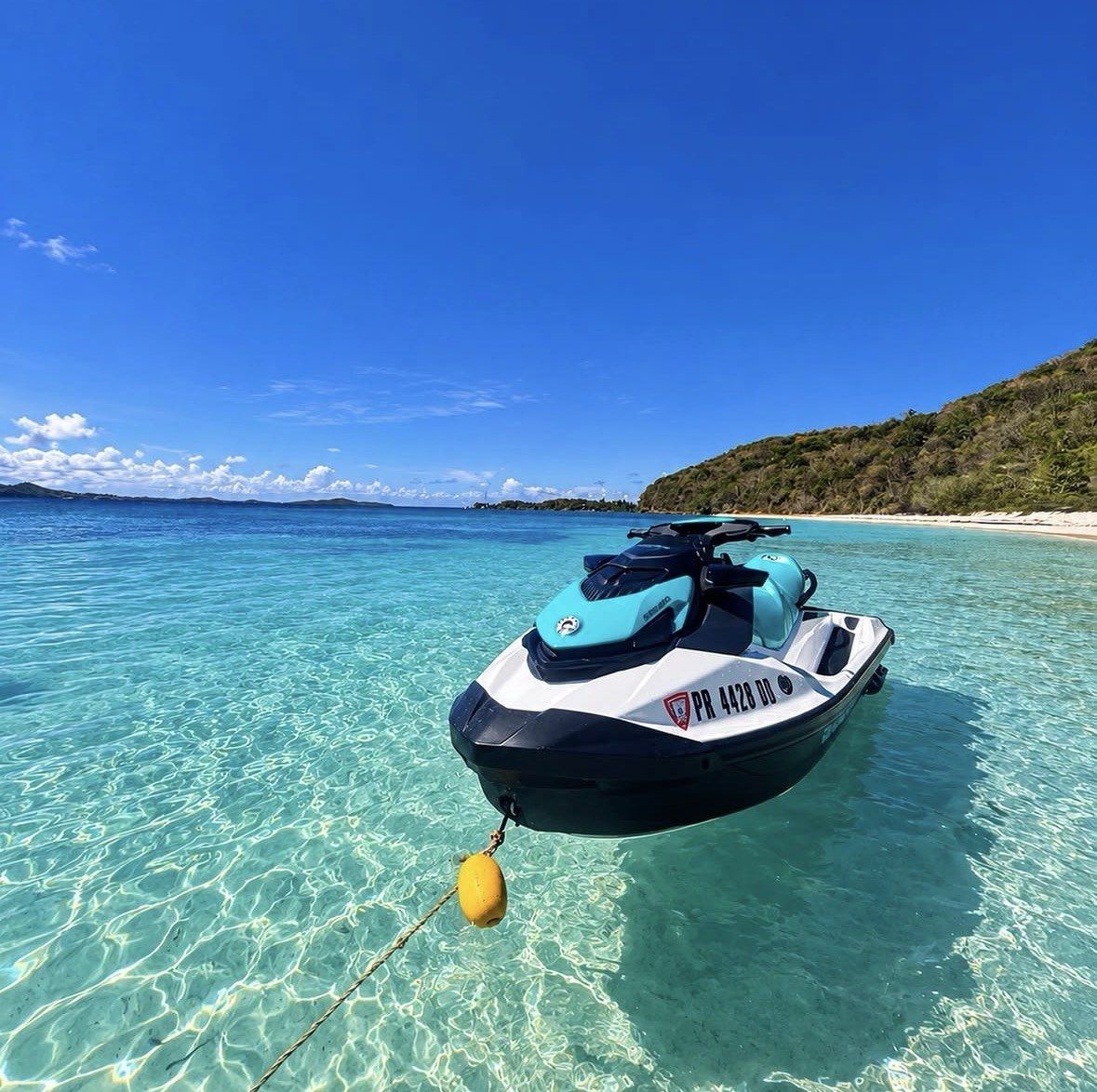
- Sea state off the beach: calm, since the cays themselves break the wind and the waves before they arrive
The name, and the places it gets mixed up with
Cayo Icacos is the Spanish name, the one used at the docks and in the reserve's own documents. English-language sources write Icacos Cay or Icacos Island, and all three point to the same place.
The common mix-up is with the mainland. Balneario Seven Seas is a beach in Fajardo you can drive to, with municipal rules of its own banning cooking, bonfires, glass bottles, unauthorised vending and fishing during operating hours, and warnings against swimming at nearby Playa Colorá and Playa Escondida because of strong currents. Icacos sits offshore and needs a boat.
The second mix-up is with the neighbours. The reserve's draft management plan lists the cays and islets from west to east, and two of the best-known names out there are not public land: Isla de Palominos and Cayo Lobos are privately owned and their land is excluded from the reserve, although the water around them is inside it. That matters at the booking stage, because a private charter will take you to Icacos or to Palominos and those are two different stops.
| Cay or islet | What the reserve documents record |
|---|
| Las Cucarachas | First name in the plan's west-to-east list of the reserve's cays and islets |
|---|
| Los Farallones | Listed next, west of Icacos |
|---|
| Cayo Icacos | 0.254 sq mi (0.659 km²) of land, the biggest of the chain's uninhabited cays, and one of the places the plan opens to public landing |
|---|
| Cayo Ratones | The rocky islets around it are listed among habitats set aside for seabird nesting, as are those around Icacos |
|---|
| La Blanquilla | Listed between Ratones and Diablo |
|---|
| Cayo Diablo | Last in the plan's list; public landing allowed |
|---|
| Isla Palominitos | Lies off the main line of cays to the south, east of the Fajardo roadstead, and the public may land on it |
|---|
| Isla de Palominos and Cayo Lobos | Privately owned; land excluded from the reserve, surrounding waters included |
|---|
Drive your own boat through the chain
The Self-Drive Mini Boat Snorkeling Tour to Icacos Island gives you a 13' boat with a 40hp Yamaha four-stroke behind a lead boat, so you see the cays around Icacos as well as its beach: 3.5 hours, from $250, rated 5.0 ★ (1969 reviews), gear, life jackets and a cooler included.
★ 5.0/5 · 1,969 reviews
Who manages the cay, and the rules that follow
No boat company owns or runs Icacos. Management sits with the public sector: the cay is one piece of the La Cordillera reef nature reserve, roughly 29,653 acres (120 km²) of which the greater part is sea rather than land, and the Departamento de Recursos Naturales y Ambientales took over its administration in 1991. The designation goes back further, recommended in 1978 and signed into effect on 2 January 1980 through the island's Coastal Zone Management Plan.
Camping and hunting are not permitted on the cay, so every trip is a same-day return, and the management plan restricts public landing within the reserve to Icacos, the beach of Lobos, Cayo Diablo and Palominitos. One rule is newer and expensive to break. Administrative Order 2025-02 carries the signature date of 10 March 2025 and puts high-volume sound systems on boats and vehicles off limits across every reserve and beach zone the department runs, with administrative fines that climb to $25,000 and can be issued again for each further day a breach continues. The Cuerpo de Vigilantes is out on patrol.
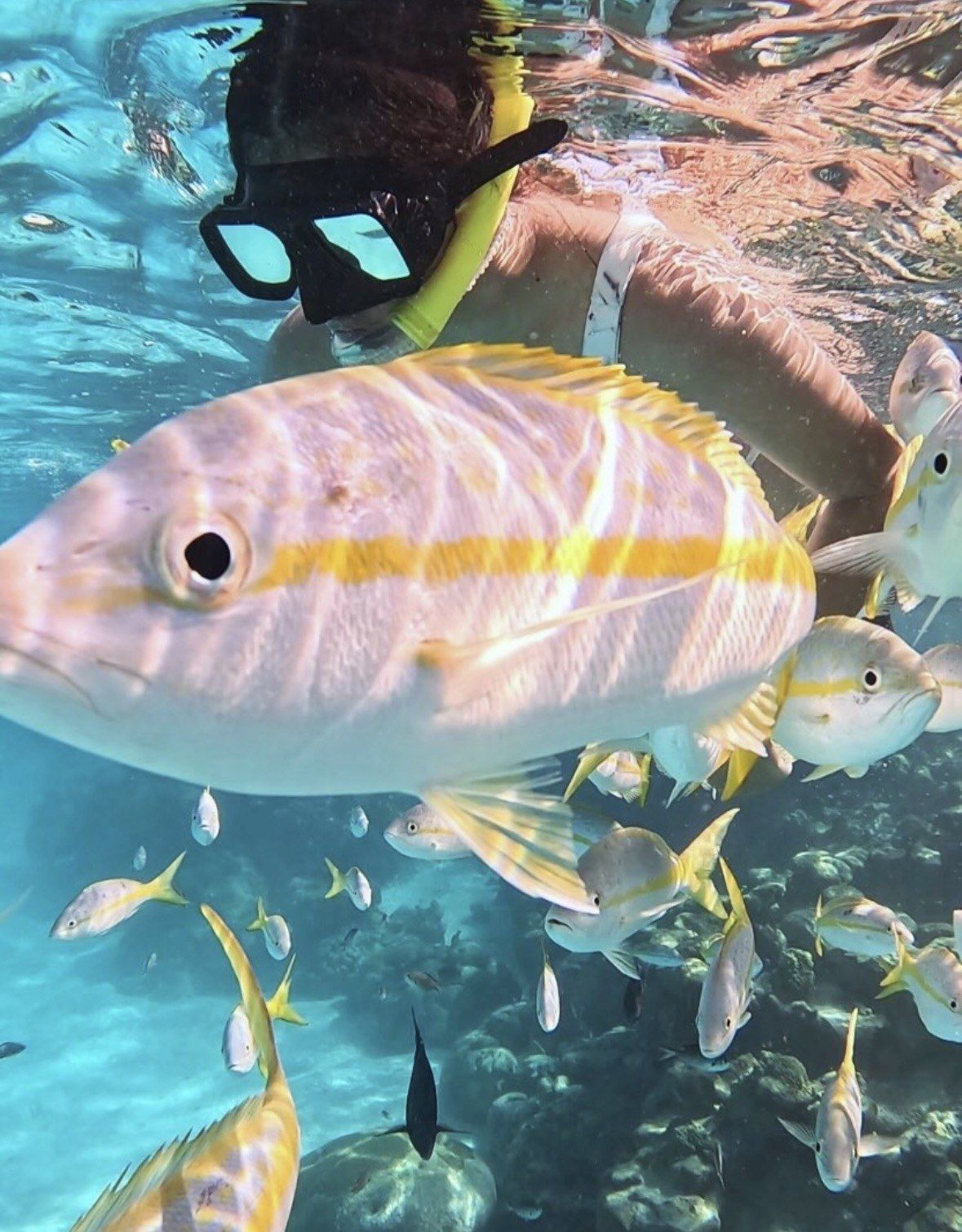
This is not a no-take reserve, and water activities of all kinds are allowed, which puts reef behaviour on you. Departmental observers at Icacos recorded at least one damaging action by 33 to 34% of the snorkellers they watched: disturbing an organism at 21.6%, kicking the reef with fins at 19.6%, touching coral at 15.6%. Endangered staghorn coral grows on the shallow reef south of the cay and turtles graze the seagrass nearby, so keep hands off, fins up, and have the boat tie to a mooring buoy.
Getting across: docks, crossing time and which trip to book
Departure points are not interchangeable. The dock you drive to depends on what you booked: water taxis work out of the small Las Croabas dock in Fajardo and not the commercial port, catamaran passengers check in at Villa Marina or Marina Puerto del Rey, and the self-drive mini-boat crews gather at Marina Puerto Chico, Carr. #987 Km 2, Bo. Sardinera, by the white tent beside Sabalos Restaurant. Reckon on an hour at the wheel from San Juan down to Las Croabas; parking is street parking a short step off the main road, and the waterfront has public restrooms and outdoor showers within walking distance. The access page on this site works through each dock and drive in detail, and the ways-to-visit page lines the formats up side by side.
If this is your first time out to an uninhabited cay, the straightforward pick is the Icacos Beach Day Package with Water Taxi Transport from Fajardo, 5 hours, from $100, rated 4.9 ★ (646 reviews). A local guide travels with the boat, and the price covers beach umbrellas, a mask and snorkel without fins, and a cooler of water, soda and local beer; lunch, snacks, towels and hotel pick-up stay on you. Those umbrellas matter on a cay with no shade of its own. The meeting point is off road 987 at the kayak village, blue buildings behind a grey fence, docks behind the buildings, navy blue boat.
Readers who would rather steer should look at the Self-Drive Mini Boat Snorkeling Tour to Icacos Island: 3.5 hours, from $250, rated 5.0 ★ (1969 reviews). It gives you a 13' boat with a 40hp Yamaha four-stroke, a lead boat to follow through the islands and cays, guided snorkelling on the reserve's reefs, premium gear and USCG-approved life jackets, a personal cooler with ice, light snacks and refreshments, plus a beginner training and safety briefing. No licence needed.
Timing is worth getting right. The driest, calmest stretch for a day on a boat runs January through March, April is the handover into the rainy months, and the Atlantic hurricane season holds from 1 June to 30 November with activity peaking on 10 September. Go on a weekday if you can, be ashore well before mid-afternoon, and note that both tours above refund in full when you cancel at least 24 hours before the scheduled departure time.
Questions people ask
Is there a public ferry to Cayo Icacos?
There is no public ferry service to these cays. You get out there on a boat from the Fajardo or Ceiba coast or from one of the marinas, and the water-taxi dock is the small one in Las Croabas rather than Fajardo's commercial port. Plan on a booked boat trip of 15 to 20 minutes each way.
Can you stay overnight on the cay?
No. The reserve's cays and islets are closed to campers, and on Icacos neither camping nor hunting is allowed, which makes every trip a there-and-back day. Day boats collect passengers in the afternoon, which sets the end of your day for you.
Is Icacos the same place as Seven Seas beach in Fajardo?
They are two separate places. Balneario Seven Seas is a mainland beach in Fajardo that you drive to, with its own municipal rules banning cooking, bonfires, glass bottles, unauthorised vending and fishing during operating hours. Icacos is a cay about 1.5 nautical miles offshore to the northeast, reachable only by boat.
Are there lifeguards or shade on Icacos?
Neither. The cay has no lifeguard cover, which leaves swimming and snorkelling entirely at your own risk, and nothing permanent has been built on it to stand under. Bring a beach umbrella or book a trip that includes one; the vegetation behind the sand is palms and sea grape bushes.
Does any private company own or run the cay?
Boat companies carry visitors across, and none of them owns or manages the cay. Icacos forms part of the La Cordillera reef nature reserve, some 29,653 acres with most of that area underwater, given its designation on 2 January 1980 and run by Puerto Rico's Departamento de Recursos Naturales y Ambientales from 1991 onwards. The department sets the rules, including the 2025 ban on high-volume sound systems.
Read also