In shortEndangered sea turtles graze the turtle grass and manatee grass meadows in the water around Cayo Icacos, so most sightings happen over shallow seagrass rather than on coral. The two snorkel reefs sit in roughly 18 to 25 ft of water and hold 83 fish species in 33 families. Seabirds breed on the rocky islets from March to September.
83fish species, 33 families
18-25 ftdepth at the snorkel stop
39scleractinian coral species
March-Septemberseabird breeding season
Cayo Icacos sea turtles: where they feed
The DRNA's own field study of the waters south of the cay records populations of endangered sea turtles grazing the seagrass beds around Icacos. Those meadows are dominated by turtle grass (Thalassia testudinum) and manatee grass (Syringodium filiforme), with manatee grass usually taking over in the deeper patches. Scan the pale sand and grass between the coral heads, and watch for a head coming up for a breath, because that is where a feeding turtle spends its time.
Official documents for La Cordillera mention sea turtles generically and describe them feeding on seagrass. They do not confirm nesting on the beaches of Cayo Icacos itself, and they never name which species use the cay. Turtles, manatees, boobies and brown pelicans all live in the reserve as protected species. The management plan flags vessel strikes as a real risk to turtles, so a boat that slows down and ties up to a mooring buoy does far less harm than one cutting across the shallows.
If you do see one, hold your distance and let it move. Do not touch it, do not chase it for a photograph and do not feed it. Where sand or an islet is marked off, stay out of it: the small rocky islets ringing Cayo Icacos and Cayo Ratones are listed among the sensitive habitats set aside for nesting protection.
Icacos island birds, nesting islets and dry scrub
Seabirds breeding inside the reserve include the roseate tern (Sterna dougallii), brown noddy (Anous stolidus), bridled tern (Sterna anaethetus), sooty tern (Sterna fuscata), brown booby (Sula leucogaster) and laughing gull (Larus atricilla). For anyone hoping to see chicks or courting adults, the window to aim for is March to September, the months when colonies are active and the management plan would rather see visitors kept off the cays that hold them. No official list exists for birds recorded on Cayo Icacos alone, so treat the reserve list as what is around you rather than a checklist for the beach.
Behind the sand there is very little cover: palm trees, sea grape bushes and rocky points closing the ends. Nothing is built, there is no permanent shade, and sand accumulation on the beaches shifts through the year with the littoral currents, so the strip you walk in January is not quite the strip you walk in July. Birds work the rocky points and the shallows; the middle of the day, with boats arriving, is the worst time to look for them.
What you see on the two snorkel reefs
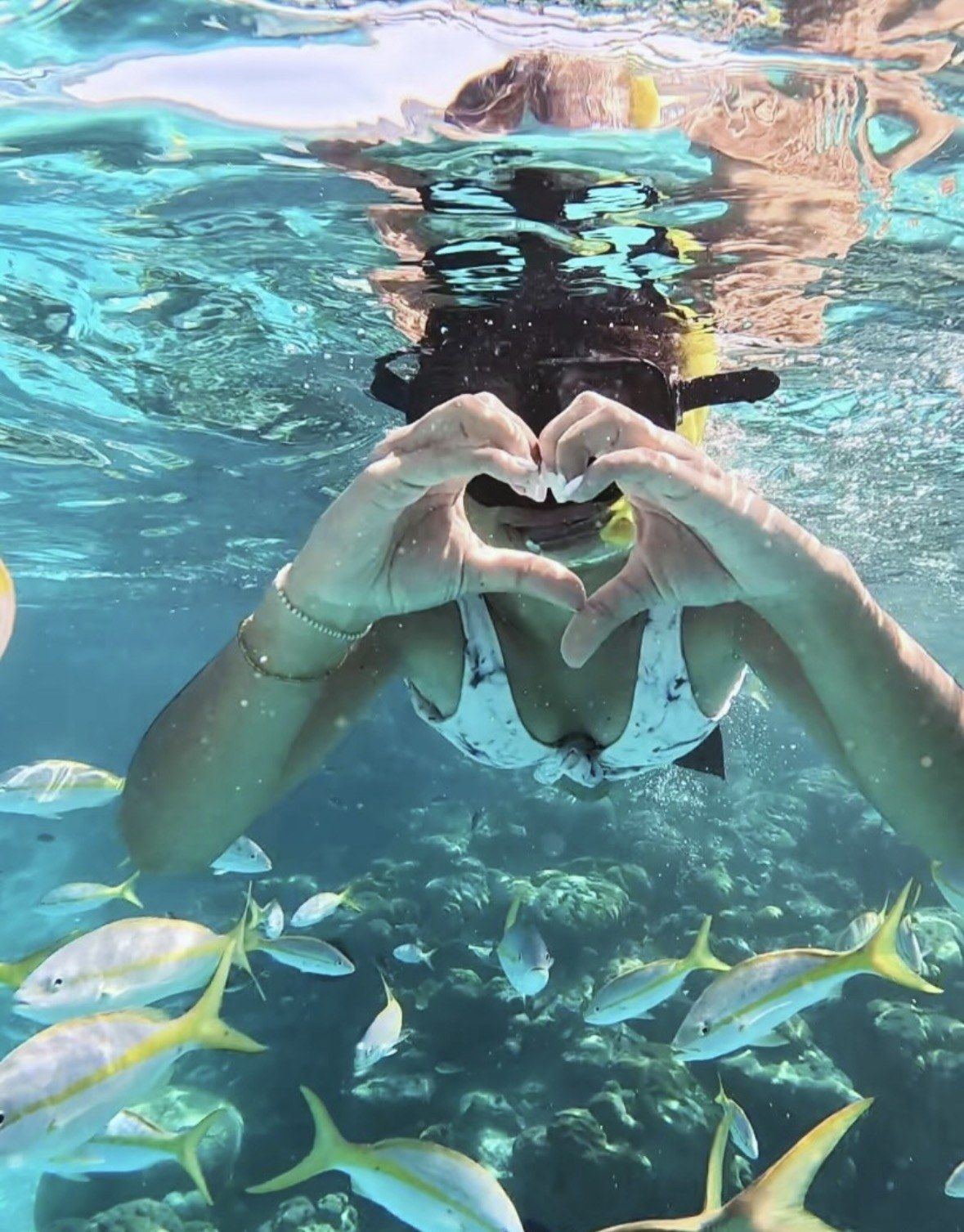
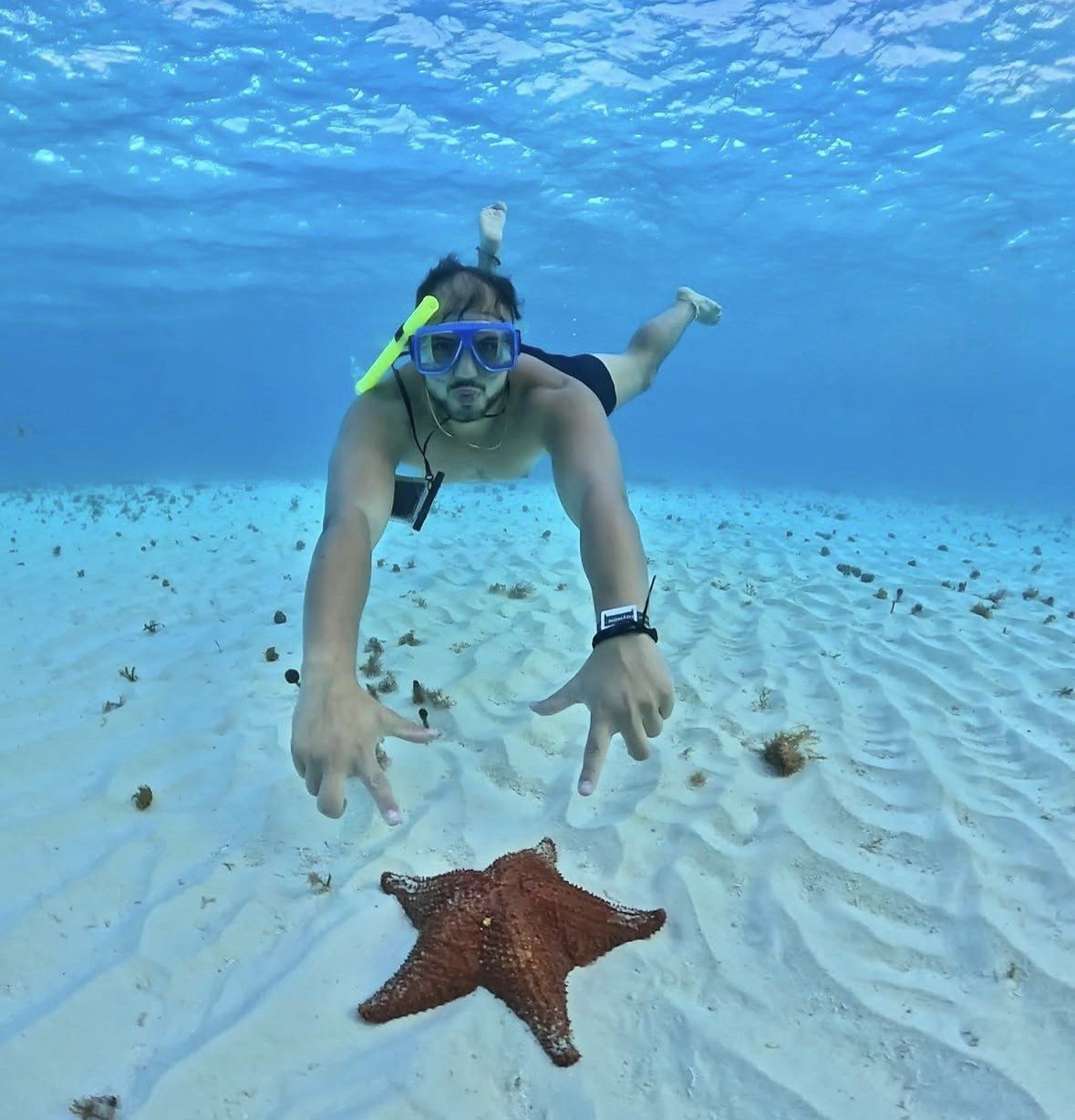
Snorkelling off Icacos happens on two shallow reefs. One is the flat reef south of the cay where catamarans start their excursions; the other sits by the mooring buoys, and the DRNA study found that one richer in both fish and coral. The usual in-water stop lies in about 18 to 25 ft, shallow enough that light still reaches the bottom on a clear morning.
The reefs of La Cordillera hold 83 fish species across 33 families, half of them commercially important. Hard corals include the genera Montastraea, Diploria, Acropora, Colpophyllia and Porites, with soft corals Gorgonia, Pseudopterogorgia and Plexaura and the zoanthid Palythoa caribaeorum. Endangered staghorn coral (Acropora cervicornis) grows on the shallow reef the tour boats use south of the cay, so keep your fins up and well clear of the bottom there.
The corals themselves are not in good shape. The management plan records 39 scleractinian coral species and three hydrocorals in the reserve as affected by bleaching, with mortality in the fire corals Millepora complanata and M. alcicornis. Visibility moves with the weather too, and in the storm half of the year a long swell stirs up exactly this depth range.
- Fish families named in the reserve's records: damselfish, triggerfish, groupers, snappers, butterflyfish, jacks, parrotfish, wrasses, barracudas and surgeonfish
- Seagrass: turtle grass and manatee grass, grazed by endangered sea turtles
- Corals: 39 scleractinian species recorded in the reserve, plus endangered staghorn on the shallow tour reef
- Depth at the usual stop: about 18 to 25 ft
Guided snorkelling with an early start
For wildlife, the earliest departure is the one worth paying for: Fajardo: Icacos Island Catamaran Snorkeling Tour with Lunch asks you at Villa Marina for check-in at 7:00 a.m., then gives you 5.5 hours from $130 with an in-person guide and snorkel gear, rated 4.8 ★ (103 reviews), which puts you over the reef in the clearest, quietest water of the day.
★ 4.8/5 · 103 reviews
How to behave on a reef that is watched
Icacos belongs to the La Cordillera reef nature reserve, administered by Puerto Rico's Departamento de Recursos Naturales y Ambientales since 1991, and not by any boat company. Snorkellers do most of the damage here without noticing: watching swimmers at Icacos, the department counted a harmful action from roughly a third of them, 33 to 34%, and the three it saw most were disturbing an organism (21.6%), a fin kicking the reef (19.6%) and a hand on coral (15.6%). None of that is malice, it is bad trim and a hand reaching out.
Keep off the coral entirely, including standing on it to rest. Leave shells, coral fragments and anything living where they are. La Cordillera is not designated as a no-extraction area and all kinds of water activities are permitted there, but the detailed collection and anchoring regulations are not published in a form that can be checked, so the safe line is to take nothing. Anchors have already stripped bare several patches of seagrass around the cays, which is why mooring buoys were installed at the busiest sites, Cayo Icacos among them.
The Cuerpo de Vigilantes patrols the marine reserves, so enforcement here is not theoretical. Birds on the rocky points and turtles in the shallows also get the benefit of the department's noise rule: since Administrative Order 2025-02 was signed on 10 March 2025, high-volume sound systems on boats and vehicles are prohibited across the reserves and beach zones it manages, and the administrative fines run as high as $25,000 and can stack day by day. There is no trash collection on the cay, so every wrapper and bottle leaves on your boat.
When sightings are best through the year
For clear water over the seagrass and the reef, the months to pick are January through March, the driest and flattest stretch of the year; by April the rains are setting in, and from 1 June to 30 November the Atlantic hurricane season sits over the calendar, its climatological high point falling on 10 September. Weed changes the picture at the surface: the Great Atlantic Sargassum Belt that feeds Caribbean shores reaches its maximum in June or July and runs thinnest in winter, and some degree of beaching has happened in nearly every spring and summer since 2001.
Time of day counts as much as the month. DRNA's counts at Icacos put the heaviest traffic at 2:00 p.m., averaging around 598 people per hour across the study zones, and wildlife thins out as engines and swimmers arrive. Checking in at Villa Marina at 7:00 or 8:30 in the morning puts you over the reef hours before that.
| Wildlife or condition | When |
|---|
| Seabird breeding in the reserve | March to September |
|---|
| Leatherback nesting in the US and Caribbean | March to July |
|---|
| Hawksbill nesting, in most places | April to November |
|---|
| Green turtle breeding | Begins in late spring |
|---|
| Clearest, calmest water for a boat day | January through March |
|---|
| Sargassum build-up and peak | Spring into summer, peaking June or July |
|---|
| Atlantic hurricane season | 1 June to 30 November, peaking 10 September |
|---|
Questions people ask
Can you swim with sea turtles at Cayo Icacos?
You can snorkel in water where they feed, but nothing is guaranteed on any given trip. The DRNA records endangered sea turtles grazing the seagrass beds around the cay, so the odds sit over sand and grass rather than coral. Keep your distance, do not touch or feed them, and let a turtle surface and move on its own. They are protected species in the reserve and at risk from vessels.
Do turtles nest on the beach at Cayo Icacos?
Official documents for La Cordillera do not confirm nesting on the beaches of the cay itself; they record sea turtles feeding on the seagrass in the surrounding water. For the wider region, hawksbill nesting mostly falls between April and November, leatherbacks nest March to July, and green turtles begin breeding in late spring, with Puerto Rico among the most significant hawksbill nesting places in the United States. Stay off any marked or roped area of sand.
Is fishing allowed in the reserve around Icacos?
Nothing in the reserve's status makes it a no-take zone: La Cordillera carries no no-extraction designation, and water activities of every kind are permitted. The detailed rules, including anything about collecting, are not published in a form that can be verified, so check before you plan around it. The reserve has been administered by the Departamento de Recursos Naturales y Ambientales since 1991 and the department can be reached on +1 787-999-2200.
Are there manatees around the cay?
Manatees are listed among the protected species living in the La Cordillera reserve, alongside sea turtles, boobies and brown pelicans. No official source gives sighting frequency at Icacos, so treat a manatee as luck rather than an itinerary item. The animals to actually plan around are the reef fish and the turtles over the seagrass.
Which snorkel stop has more to see?
The DRNA found the reef by the mooring buoys richer in fish and coral diversity than the flat reef south of the cay where catamarans start their excursions. Depth is much the same at either one, somewhere around 18 to 25 ft. Which one a trip uses on the day depends on conditions and on the captain, which is the practical reason to go with a guided snorkel trip rather than guess from the beach.
Read also