In shortIcacos island weather runs on easterly trade winds that stiffen through the day, so a morning crossing is flatter than an afternoon one. January through March is the driest and calmest stretch for a boat day, while the Atlantic hurricane season runs 1 June to 30 November and peaks on 10 September. Book a trip that refunds in full 24 hours before departure.
1 Jun–30 NovAtlantic hurricane season
10 SeptemberPeak of storm activity
January–MarchDriest, calmest window
24 hoursFull-refund cancellation
How icacos island weather works through a single day
The wind on this coast comes out of the east almost every day, and it does not blow evenly. It is lightest around dawn, picks up as the land heats and is usually at its strongest in the early afternoon. That matters because the only exposed part of your day is the water leg: Icacos sits about 1.5 nautical miles northeast of Fajardo, 15 to 20 minutes of engine time, and the same hop that feels glassy at 10 a.m. can be a slapping, spray-in-the-face ride at 3 p.m. Small boats feel it first, and the return leg is the one that catches people out.
Inside the reserve the picture changes. The islets and reefs of the chain absorb most of the fetch, and the DRNA describes the water in the Icacos use zones as calm, sheltered by the cays themselves. Almost all the chop you feel sits on the open stretch between the coast and the reserve boundary.
Take the earliest departure you are offered. Catamarans from Villa Marina check in between 7:00 and 8:30 a.m. and are crossing while the surface is still soft. If you are arranging a water taxi at the dock, the published windows start at either 10 a.m. or 11 a.m., with 8 a.m. to 5 p.m. possible for larger groups. Those posted windows are not fixed, so phone the operator on the morning itself: wind and the state of the water can pull a departure forward or push it back.
Cayo icacos sea conditions and why visibility drops
Two separate things cloud the water, and they behave differently. Swell arriving from a distant system pushes a long, slow surge across shallow ground and lifts fine sand off the bottom; you can get that on a day with blue sky and almost no local wind. Runoff is the other one. Heavy rain on the mainland drains off the Fajardo coast and pushes sediment seaward, so clarity is often poorer for a day or two after a soaking, even when the sea looks flat. Give it a day after a wet night if your date can move.
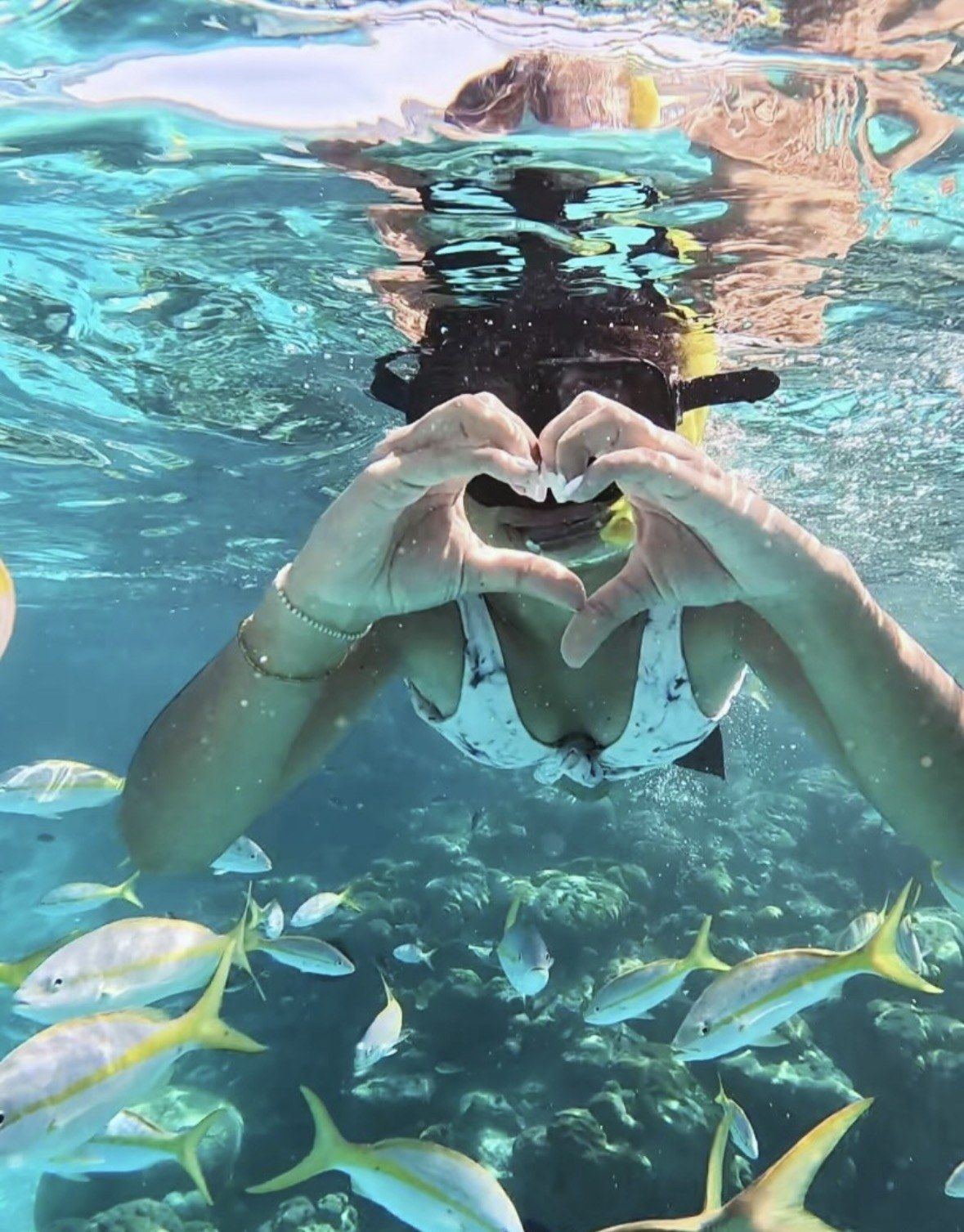
The in-water stop on these trips is shallow, roughly 18 to 25 ft, which is exactly the depth range that surge reaches. There are two reefs in play: the flat reef off the south coast where catamaran excursions begin, and the reef beside the mooring buoys, which the DRNA's survey found holds more fish and more coral. When one of them is being worked by swell or wind, a captain will use the other, or shorten the snorkel and give the time back on the beach. Ask at check-in which reef they expect to use.
Snorkellers cloud the water themselves. The DRNA logged fins kicking the reef in 19.6% of observed cases, and every kick into sand lingers for whoever swims through next. Keep flat, fins up and away from the bottom, and never touch or stand on coral, including the endangered staghorn.
Sun exposure on an open sand cay
Icacos has no permanent shade structures. The vegetation is palm trees and sea grape bushes with rocky points at the ends of the sand, and that is the whole inventory. There are also no restrooms, no drinking water, no food service, no trash collection and no lifeguards, so swimming and snorkelling are at your own risk and everything you need for five hours in the open comes across on the boat with you. Bring a bag for your rubbish; nobody collects it.
Treat shade as equipment. The guided beach-day package has umbrellas and a mask and snorkel inside the fare, which is simpler if you flew in with nothing; on other formats, bring your own shade and check what is on board before you go. Carry water too; nobody on the cay sells it.
Shade and gear already on the boat
On a cay with no permanent shade and no water for sale, this 5-hour beach day from $100 crosses from Las Croabas with a local guide, beach umbrellas, a mask and snorkel and a cooler of drinks included, and refunds in full up to 24 hours before departure.
★ 4.9/5 · 646 reviews
When seaweed shows up, and where it lands
Sargassum is seasonal and regional. Satellite monitoring of the Great Atlantic Sargassum Belt, the mass that supplies weed to Caribbean shorelines, shows its volume highest in June or July and thinnest in winter, and shores in the region have taken some beaching in nearly every spring and summer since 2001. Build-up runs from spring into summer, the same half of the year when wind and swell are pushing hardest on the exposed side of the cay.
Day visitors land on the southwest strip that the DRNA maps as Zone B, the sheltered side where the water taxis come in, so you are not usually standing in the worst of it. The sand itself moves too: the reserve's management plan notes that accumulation on the beaches of Icacos and Palominitos varies through the year with littoral currents, so the profile you find in February is not the one you find in August. If weed on the shoreline would spoil the day for you, take a date between January and March, which is the calmest and clearest window anyway.
Storm season, cancellations and what you get back
Storm risk follows a calendar you can plan around: the Atlantic season opens on 1 June and closes on 30 November, with the climatological high point of activity falling on 10 September. Those are the months when a trip is most likely to be called off for unsafe wind or water. No operator publishes a wind or swell number at which it stops sailing, so the call sits with the captain on the morning, and it can come on a day that looks workable from the dock.
Refund treatment depends on who cancels. On the tours listed here, the deadline you control sits 24 hours ahead of the scheduled departure, and pulling out before it returns the fare whole. When the captain calls a trip off for weather, the cancellation is not yours to manage, so check the tour's terms for that case before you book.
Between June and November, book the format whose terms you can actually use, and make your own decision inside the refund window rather than waiting on the forecast.
Reading a forecast the evening before
Read the forecast for the whole day, including the hours after lunch. A 10 a.m. crossing under a forecast that ramps up after noon still gives you a rough ride home at 3 or 4 p.m., because the last boats off the cay leave in that window.
What to check before you commit:
- Wind speed and direction for the afternoon, not just the morning, since the easterly flow builds with the heat
- Swell height together with period: a long-period swell works the shallow reefs at 18 to 25 ft even in light wind
- Rainfall on the mainland over the previous day, which is what drives the runoff that dulls clarity
- Tropical advisories if your date falls between 1 June and 30 November
- Your own cancellation deadline, so you still have the option when the forecast firms up
Questions people ask
What happens if my Icacos trip is cancelled for weather?
The captain makes that decision on the day, most often between 1 June and 30 November. Catamaran operators refund the full fare when the cancellation is theirs for weather. Tours booked on this site are also refundable in full if you pull out at least 24 hours before the scheduled departure time, which is the lever you control.
Which months give the flattest water for the crossing?
Aim at the first quarter of the year. The National Weather Service office in San Juan dates the dry season from January through March, and marks April as the month that turns over into the rainy season. Within any month, an early departure beats a late one because the trade winds strengthen through the day. The water leg itself is only about 15 to 20 minutes from Fajardo.
Why did the boat change the snorkel stop?
There are two shallow reefs used by Icacos trips: the flat reef south of the cay where catamarans start, and the reef beside the mooring buoys, which the DRNA found richer in fish and coral. Both sit in roughly 18 to 25 ft of water, so swell and wind affect them differently. Captains pick whichever is calmer and clearer that morning.
Is there anywhere to shelter from sun or a passing squall?
No. Icacos is uninhabited with no restrooms, no drinking water, no food service and no permanent shade; the only cover is palm trees and sea grape bushes behind the sand. Bring an umbrella or book a package that includes one, and remember there are no lifeguards, so time in the water is at your own risk.
Does sargassum affect the beach you land on?
The regional belt that feeds Caribbean shores peaks in June or July and is lowest in winter, with beaching recorded in nearly every spring and summer since 2001. Day visitors come ashore on the sheltered southwest strip, DRNA Zone B, which is not the most exposed side of the cay. Littoral currents move the sand around from season to season as well, so the width and shape of that strip is not the same in every month.
Read also